
What’s Happening in the WNBA, Broken Down for Everyone Confused Right Now

A booming league, tense labor negotiations, and the possibility of a strike. Here’s why the Women's National Basketball Association (WNBA) is suddenly dealing with its biggest off-court drama in years.

The WNBA’s “Group Chat Drama” Moment
Imagine a group of friends who started throwing a party together years ago.
At first, the party was small. A few people showed up, the snacks were basic, and everyone was just happy it existed. Over time, though, the party slowly got bigger. More people started coming. The music got better. Suddenly, it became one of the most popular parties in town.
Now imagine that same friend group sitting around the kitchen table arguing about who should get what share of the money from the ticket sales.
That, in a nutshell, is what’s happening right now in the WNBA.

The league and the players, represented by the Women's National Basketball Players Association, are negotiating a new collective bargaining agreement (CBA), which basically sets the rules for salaries, benefits, revenue sharing, and working conditions.
The current CBA was originally signed in January 2020, and it included a clause allowing either side to opt out after the 2025 season and renegotiate a new agreement.
And like any good friend group, disagreements and things have gotten a little tense.
Step One: The Party Suddenly Got Popular
For years, the WNBA was growing steadily but quietly. Recently, though, the league has exploded in popularity.
The surge became especially noticeable during the 2024 season, when television ratings jumped dramatically, and attendance increased across the league.
Games are drawing bigger crowds. Television ratings have climbed. Social media engagement has skyrocketed. Players like Caitlin Clark, alongside established superstars like A'ja Wilson and Breanna Stewart, have helped bring unprecedented attention to the league.
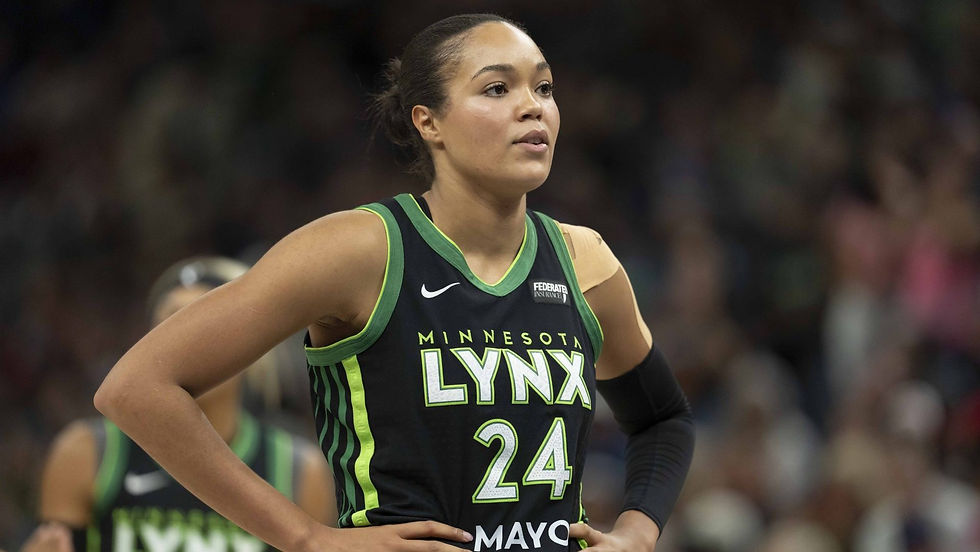
To go back to the party analogy: suddenly, the living room is packed, the line outside the door is getting longer, and people are asking where to buy tickets.
Naturally, the people actually performing at the party, the players, have started asking an important question:
If the party is making more money than ever, shouldn’t we get a bigger slice of it?
Step Two: The Players Asked to Renegotiate
The current CBA was signed in 2020 and included major improvements for players, including higher salaries and better travel accommodations.
But the agreement also included an opt-out clause, meaning the players could reopen negotiations if the league’s financial situation changed.
In October 2024, the players used that clause.
Think of it like someone in the friend group saying:
“Hey, when we agreed to split the money before, the party was way smaller. Now it’s huge. Maybe we should revisit that deal.”
That decision triggered the current round of negotiations.
Step Three: The Big Fight - Who Gets What
Negotiations between the WNBA and the WNBPA began following the October 2024 opt-out announcement, and discussions have continued through 2025 and into early 2026.
This is where the disagreement really begins.
The players want a system that gives them a larger percentage of the league’s overall revenue, arguing that the athletes themselves are the main attraction, bringing fans into arenas and viewers to broadcasts.
The league, on the other hand, argues that it still carries high operating costs — everything from arena rentals to marketing to expansion investments — and that those expenses need to be accounted for before revenue is shared.
In friend group terms, the argument sounds something like this:
Players:
“We’re the ones bringing the energy to the party. People are showing up because of us.
League:
“True, but we’re the ones paying for the house, the music, and the security.”
Both sides agree the party is bigger. They just disagree on how to divide the money.
Step Four: Someone Threatened to Leave the Party
When negotiations stall in sports, unions sometimes take a dramatic step: they vote to authorize a strike.
That’s exactly what happened here.
In 2025 players’ union voted to authorize a strike if necessary, which essentially means the players could refuse to play if a deal isn’t reached.
To return to the friend group analogy, this is the moment where someone pushes back their chair and says:
“If we can’t figure this out, maybe we just won’t show up to the party at all.”
A strike doesn’t mean it will definitely happen. It just means the players now have that option if talks completely break down.
Step Five: The Timing Couldn’t Be More Dramatic
What makes this situation particularly tense is that the WNBA is currently enjoying one of the most exciting moments in its history.
Interest in the league is rising quickly, and expansion is already underway with the upcoming arrival of the Golden State Valkyries.
New fans are discovering the league, media coverage is expanding, and the sport is gaining a cultural presence it hasn’t had before.
In other words, the party has never been hotter.
Which makes the idea of the music suddenly stopping, even temporarily, feel especially risky.
What Happens Next
For now, the players and the league are still negotiating. Both sides say they want to reach a deal before the next season begins, and historically, most sports labor disputes eventually end in compromise.
Because, despite all the drama, everyone involved still wants the same basic thing:
They want the party to keep going.
The real question isn’t whether the WNBA will continue to grow. The momentum is already there.
The question now is how that success will be shared among the people who built it.
Edited by: Megan Livengood


Comments